Loading...
Loading...
Heat resistance, slip safety, and cost efficiency — a technical breakdown of why Moroccan limestone outperforms travertine and bluestone for pool deck applications.
Anyone who has walked barefoot across a dark porcelain pool deck in July understands the problem. Surface temperature matters more than aesthetics when families are using the space daily. Moroccan limestone has a natural advantage here: its low thermal conductivity and light color palette mean it absorbs less solar radiation and releases heat slowly. In independent testing, limestone surfaces registered 15-20 degrees F cooler than concrete pavers and 25-30 degrees F cooler than dark porcelain under the same sun exposure conditions.
This is not a minor detail for specification. Pool decks are high-liability zones, and thermal comfort directly affects client satisfaction and usability. A surface that stays walkable at 2 PM in Houston without sandals is a surface that gets used — and that is the entire point of outdoor living design.
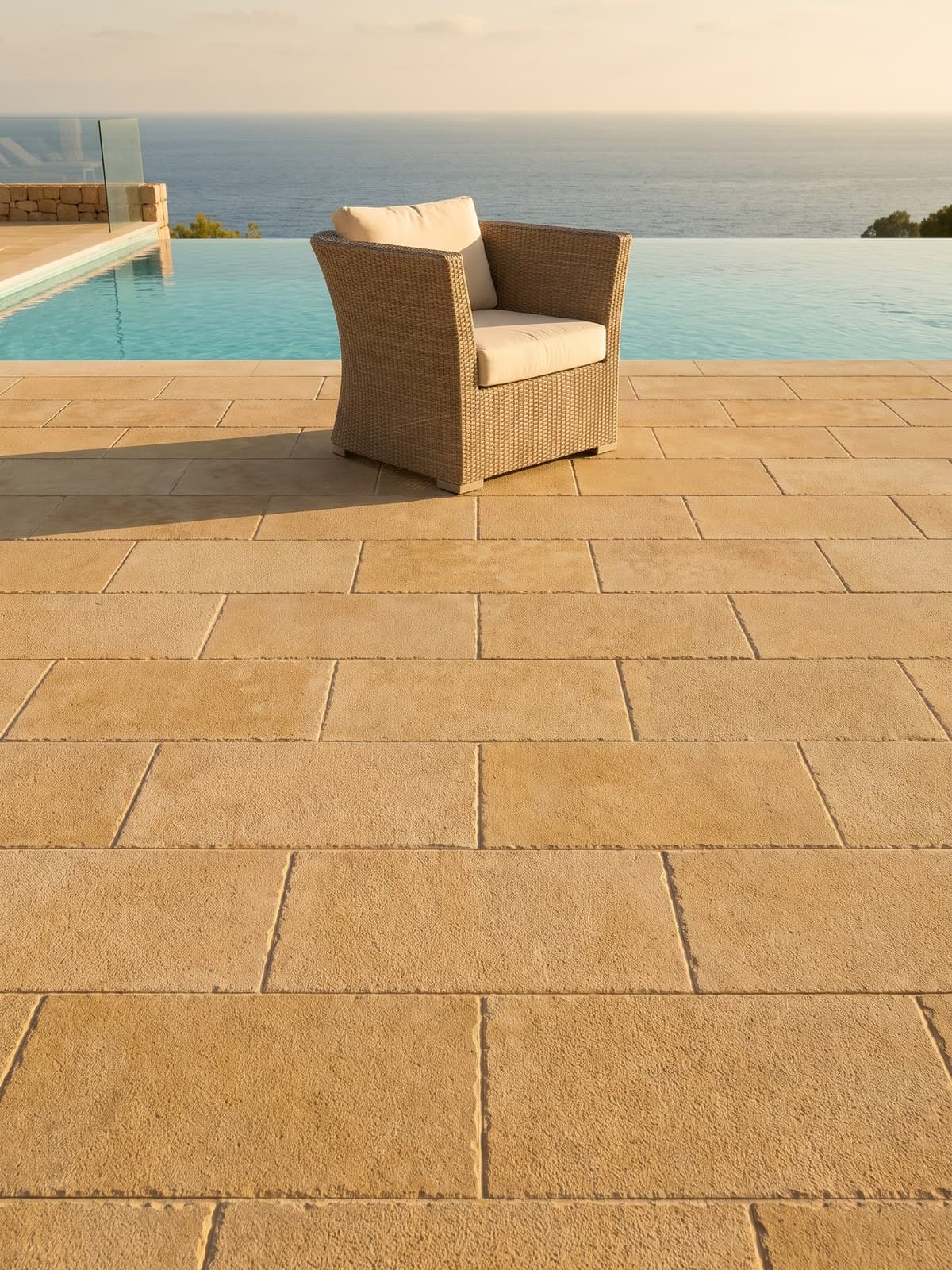
Pool decks require a minimum R11 slip resistance classification under DIN 51130 — the standard referenced by most US pool codes. All of Stonemade's textured outdoor finishes (Castle, Dune, and Rustic) meet or exceed R11. Castle finish achieves this through controlled sandblasting that creates micro-texture without roughness. Dune adds a softer, wave-like profile. Rustic provides the most aggressive grip through natural split-face cleavage.
The coefficient of friction on wet limestone in Castle finish consistently measures above 0.60 — well above the 0.42 threshold that OSHA references for wet walking surfaces. Unlike sealed concrete, which degrades in slip resistance as sealer wears, limestone's texture is integral to the stone itself and does not diminish over time.
For pool coping specifically, a bullnose or eased edge in 30mm thickness provides both a finished appearance and a comfortable grip point. Our factory produces custom coping profiles at no additional charge on orders above 50 linear meters.
Natural stone pool decks occupy a range of $12 to $35 per square foot for material alone. Here is how the three most common options compare at wholesale pricing for a typical 800 sq ft pool deck project:
The cost advantage of Moroccan limestone is compounded by the MAFTA trade agreement: 0% US import duty on all Moroccan stone products (HTS 6802). This is a ratified bilateral treaty — not a temporary provision. When you factor in duty, freight, and quality consistency, Moroccan limestone delivers the strongest value proposition in the market for 2026.
A common concern with natural stone pool decks is maintenance — particularly around chlorinated water. Moroccan limestone has a water absorption rate below 4% (ASTM C97), which means surface splashes do not penetrate meaningfully. Chlorinated water that is promptly rinsed (within normal pool use patterns) does not cause etching or discoloration.
For ongoing maintenance, the protocol is straightforward: rinse the deck weekly with clean water, clean quarterly with a neutral pH stone cleaner, and apply a penetrating sealer every 3-5 years (not a topical sealer, which would reduce slip resistance). This is less maintenance than concrete pavers (which require joint sand replenishment and sealer recoating annually) and comparable to travertine.
In freeze-thaw climates, Moroccan limestone in Castle and Rustic finishes is rated for exterior use. The stone's density (~2,450 kg/m³, ASTM C97) and controlled porosity allow moisture to migrate without causing spalling. We have installed projects in climate zones 4-6 with no reported freeze-thaw damage over five-year periods.
Three finishes dominate our outdoor project specifications, each with distinct characteristics:
Castle (Sandblasted) — The most versatile outdoor finish. Medium texture with a uniform, refined appearance. Ideal for pool decks where barefoot comfort is paramount but visual sophistication matters. Available on all limestone families. Solara Castle and Atlas Grey Castle are the two most specified products for pool applications.
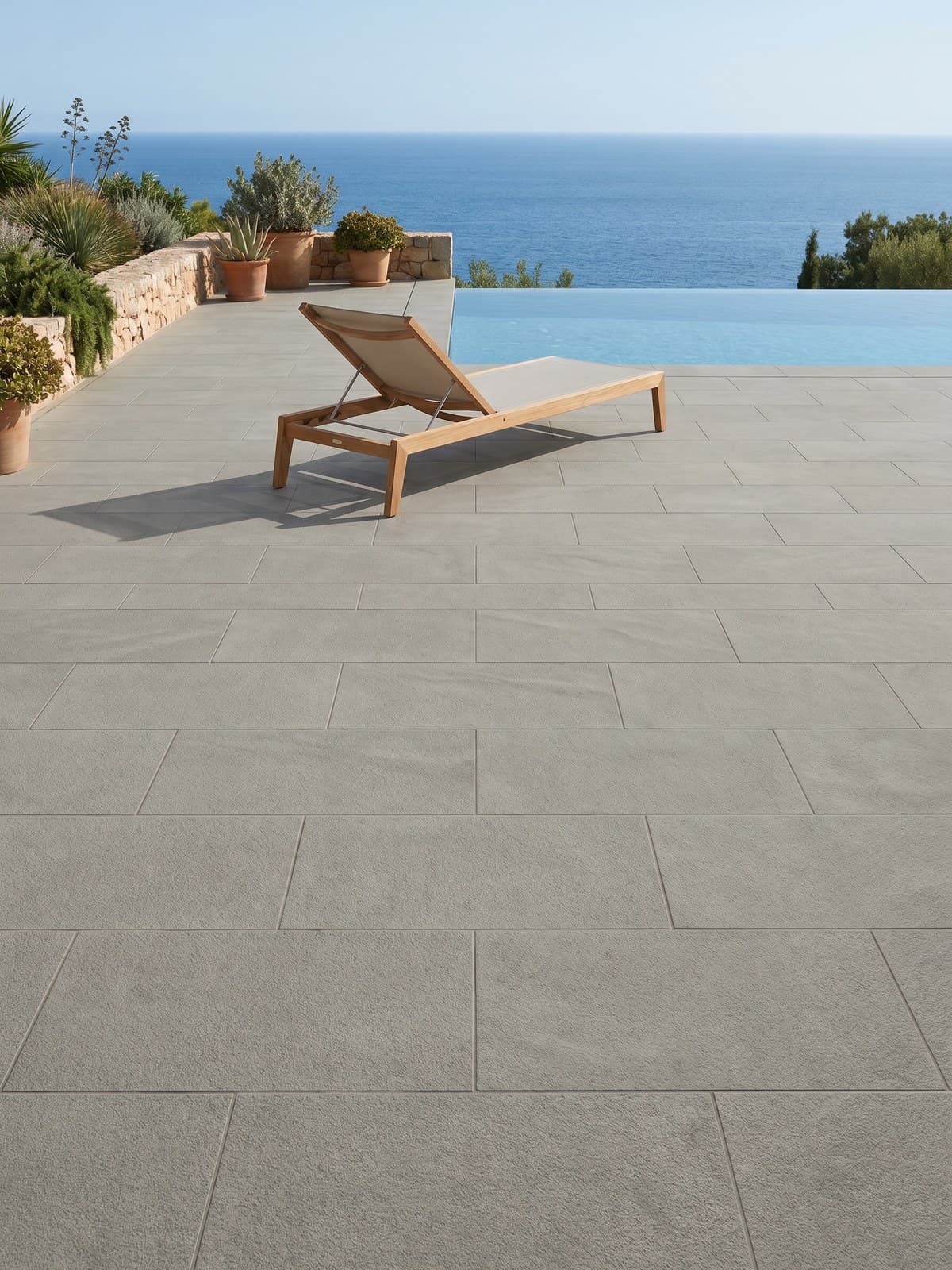
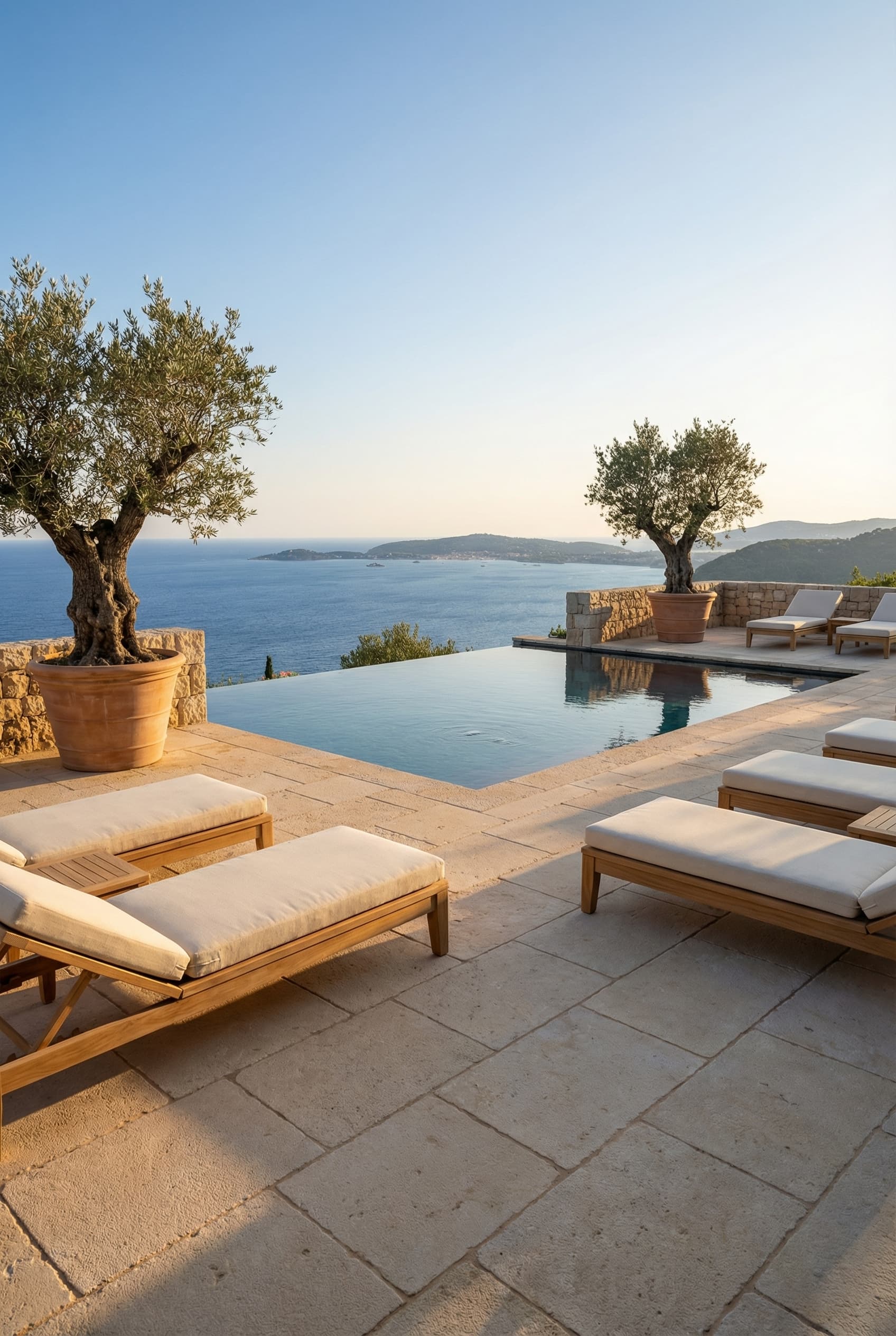
Dune (Tumbled) — Soft, weathered edges with a gently undulating surface. Creates a Mediterranean villa aesthetic. Edges are slightly rounded, which eliminates sharp tile corners — a practical safety advantage around pools where children play. Solara Dune delivers the warm honey tones that pair naturally with terracotta planters and olive trees.
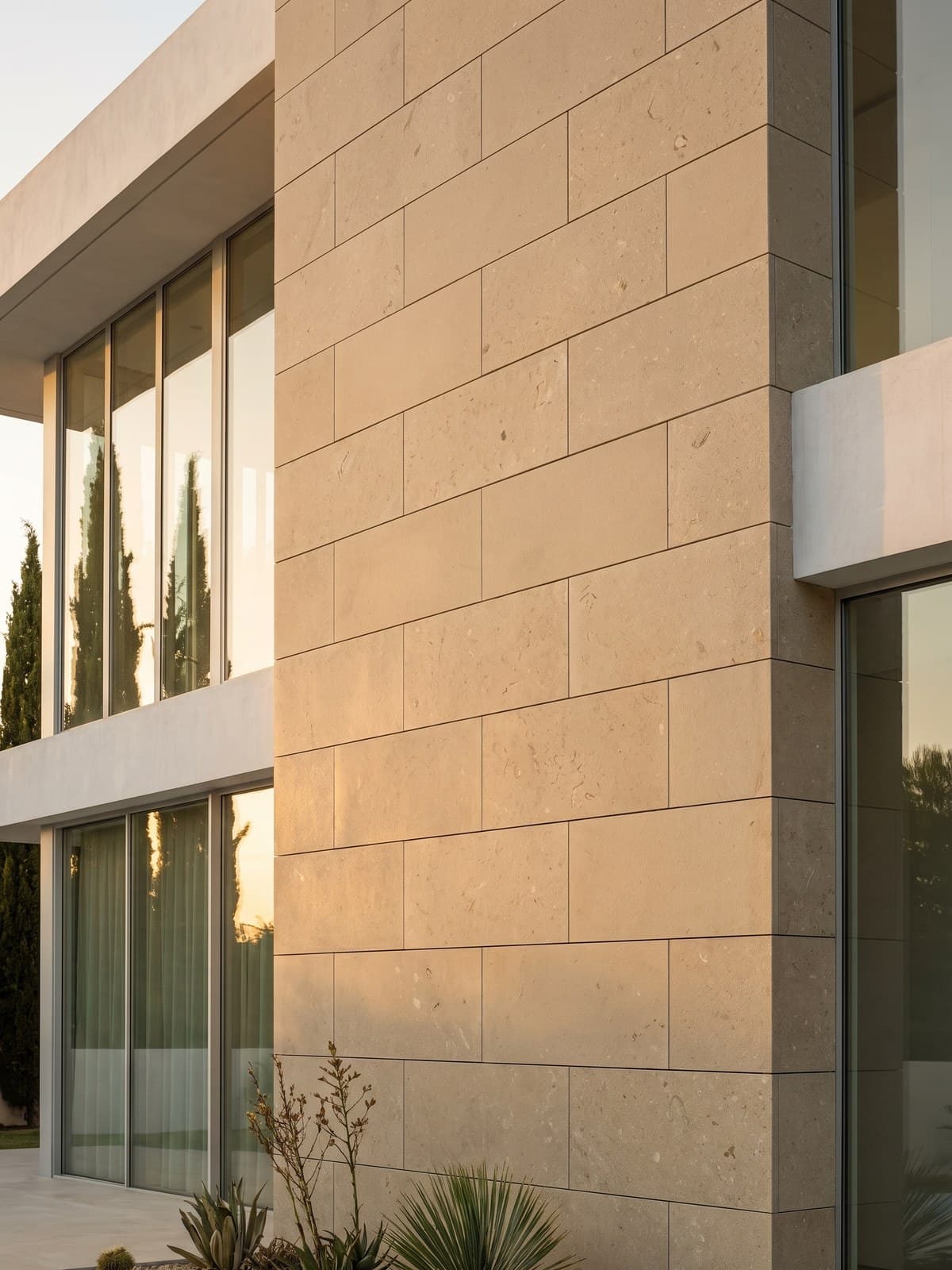
Rustic (Split-Face) — The most textured option. Natural cleft surface with maximum slip resistance. Best suited for pool coping, step treads, and transition zones between pool and landscape. The pronounced texture creates dramatic shadow play throughout the day.
Proper installation is what separates a pool deck that lasts decades from one that develops issues in year two. Here are the key considerations for limestone pool deck installations:
Stonemade provides detailed installation guides with every order and offers technical support from our team for complex projects. For contractors new to Moroccan limestone, we recommend starting with a sample installation of 2-3 square meters to calibrate adhesive open time and joint width before proceeding with the full deck.