Loading...
Loading...
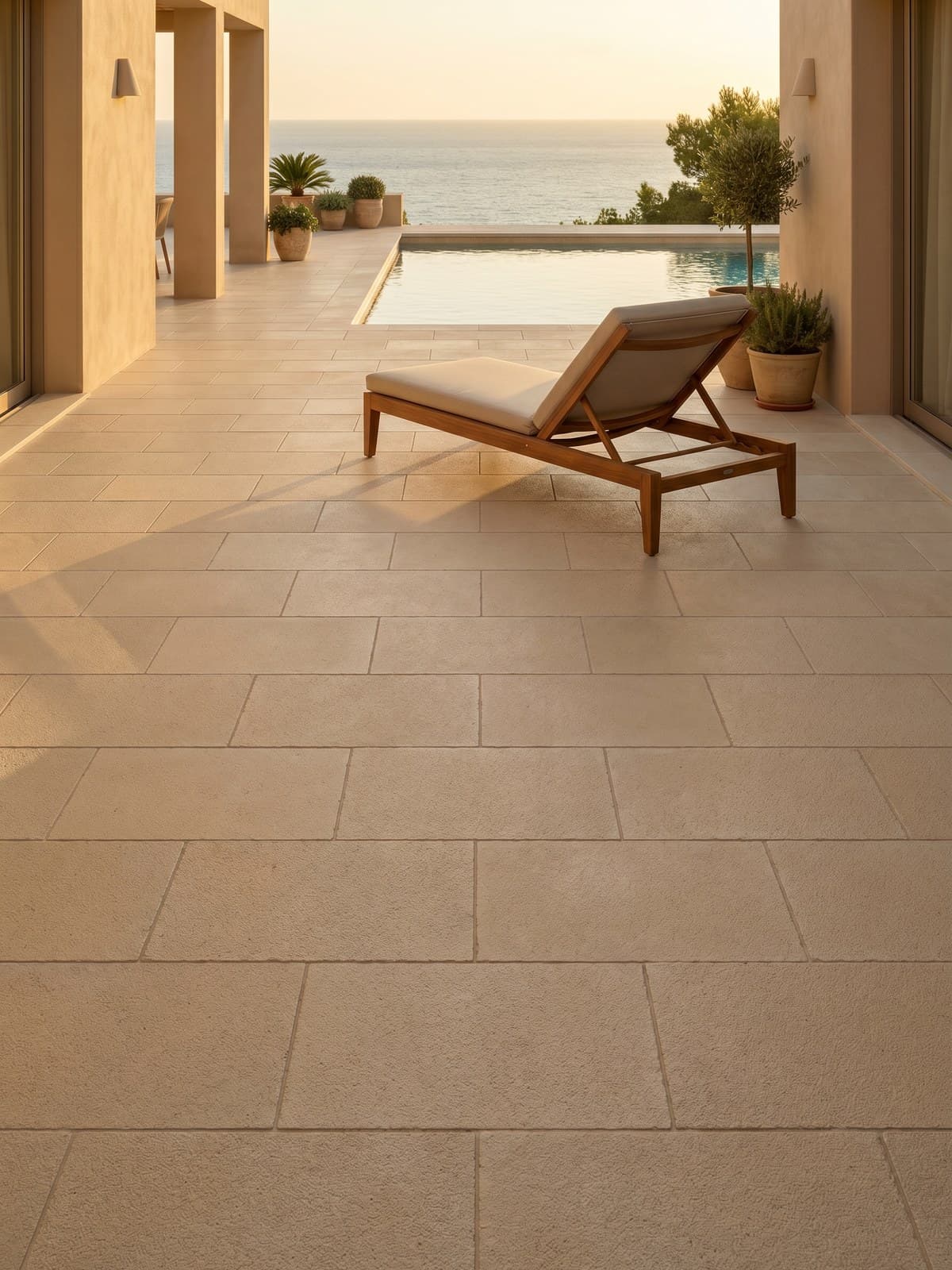
The complete comparison — appearance, durability, maintenance, cost, and best applications. Everything architects and homeowners need to choose between limestone and travertine.
Limestone and travertine are both calcium carbonate stones formed over millions of years, but their formation process creates distinctly different materials. Limestone forms from compacted sediment on seabeds — dense, uniform, and fine-grained. Travertine forms from mineral-rich hot springs — porous, layered, and textured with natural voids. For architects and homeowners, the choice comes down to aesthetics, performance requirements, and budget. Here are the key differences at a glance: Density — limestone ~2,450 kg/m³ (ASTM C97), travertine 2,300–2,500 kg/m³. Porosity — limestone 3–4% (ASTM C97), travertine 5–25%. Surface options — limestone offers 15+ finishes, travertine typically 3–5. Price range — comparable at $8–25/sqft installed.
Limestone presents a refined, understated surface. Colors range from warm cream (Atlas Beige) through grey (Atlas Grey, Montravel) to deep black (Mountain Black). The grain is fine and consistent — ideal for the 'quiet luxury' aesthetic dominating 2026 design. Finishes like Honed and Leather create sophisticated, contemporary surfaces. Castle and Rustic finishes add texture without the rustic feel of travertine. Travertine is characterized by visible pores, veining, and natural holes. Filled and honed travertine is smoother but always retains visible surface variation. Unfilled travertine has an organic, ancient quality — beautiful but harder to maintain. Colors tend toward warm beige, walnut, and ivory. The key difference: limestone gives you control over the surface expression through finishing. Travertine's character is inherent in the stone.
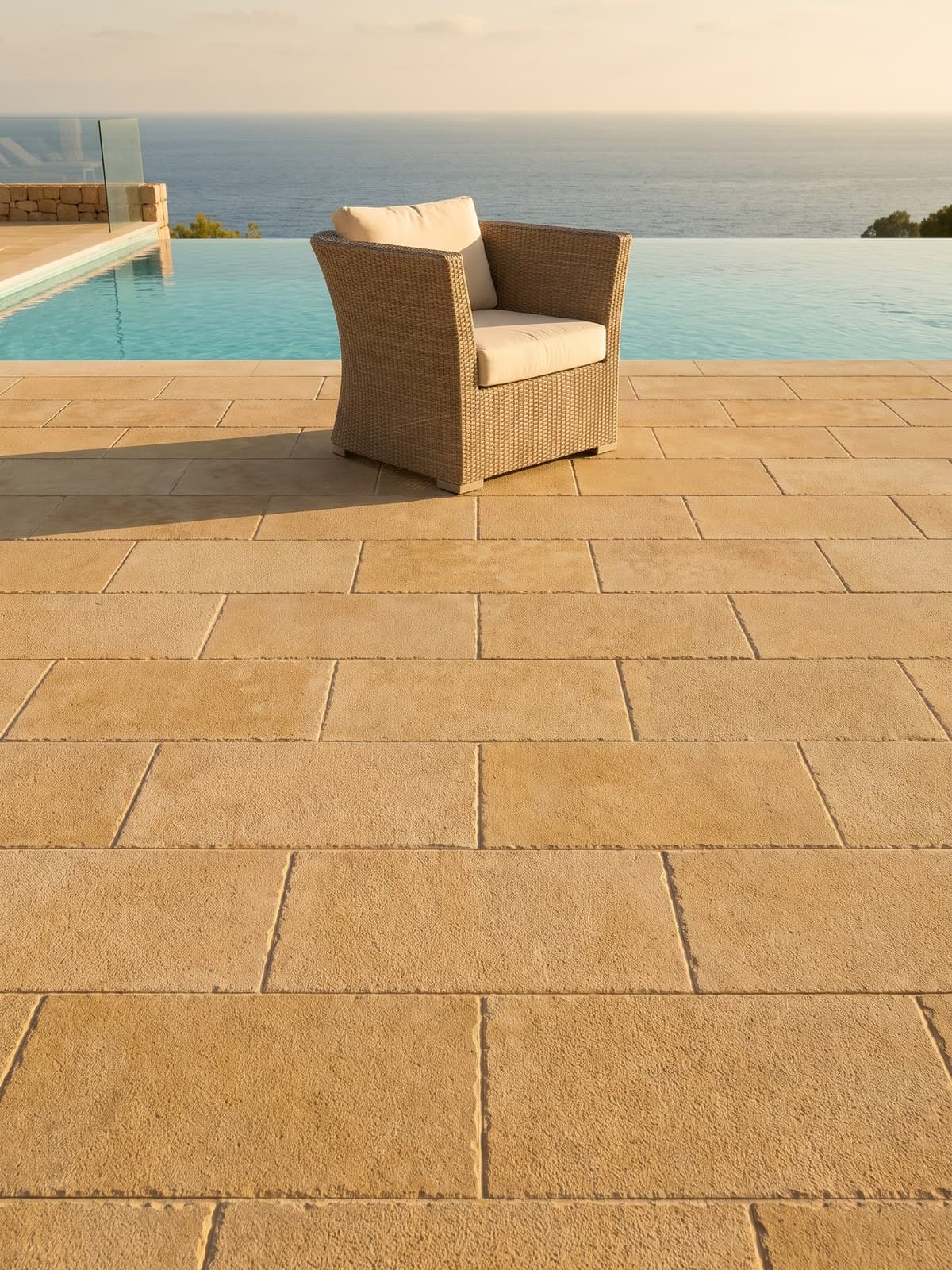
Limestone has a clear advantage in structural applications. Lab-tested compressive strength ranges from 40–90 MPa (vs travertine's 30–50 MPa), with the harder varieties significantly outperforming travertine. Water absorption averages 3–4% (ASTM C97) vs travertine's 5–25%, so limestone performs better in wet areas, freeze-thaw cycles, and high-traffic commercial environments. For pool decks specifically: limestone's lower porosity means less water penetration, better freeze resistance, and easier stain prevention. Castle and Rustic finishes provide R11 slip resistance without the pore-cleaning challenges of unfilled travertine. For interior floors, both perform well. Limestone's density makes it more scratch-resistant. Travertine's softness means it shows wear sooner in commercial settings but develops a pleasing patina in residential use.
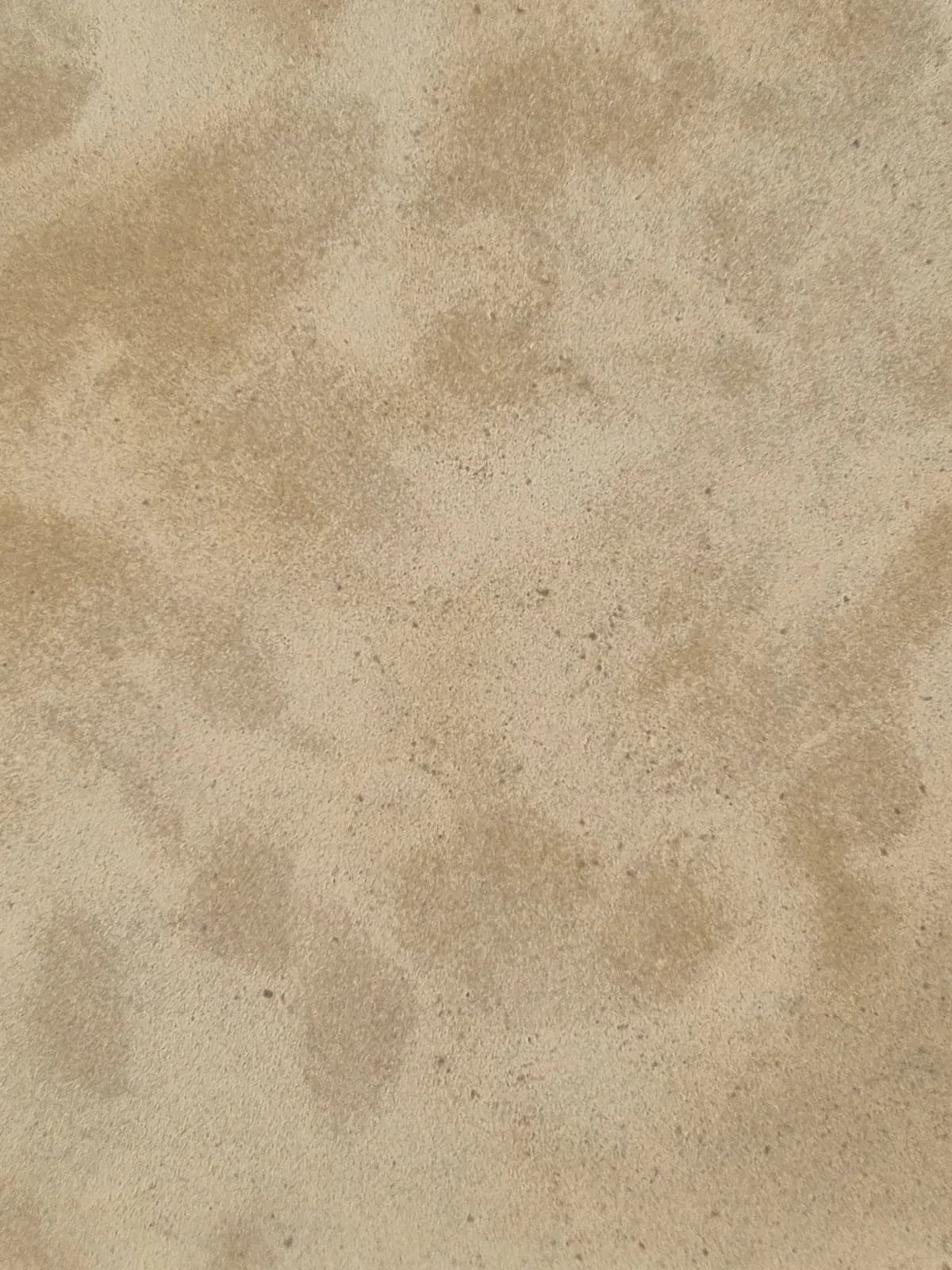
Limestone: minimal maintenance. Honed and Castle finishes resist staining naturally. Seal every 2-3 years for countertops and wet areas. Clean with neutral pH cleaner. No pores to fill or maintain. Travertine: moderate maintenance. Filled travertine requires periodic re-filling as material shifts. Unfilled travertine traps dirt in pores and requires more frequent deep cleaning. More susceptible to acid etching (citrus, wine, vinegar). Resealing required annually for heavy-use surfaces. Bottom line: limestone is the lower-maintenance choice, especially for kitchens, bathrooms, and outdoor applications where spills and moisture are common.
Limestone excels in: contemporary interiors (honed, leather finishes), commercial lobbies and hotels (density ~2,450 kg/m³, low maintenance), pool decks and terraces (textured finishes, thermal comfort, freeze resistance certified EN 12371), kitchen countertops (stain resistance with proper sealing), exterior facades and cladding (UV stability, weather resistance), and bathroom walls and floors (moisture resistance). Travertine excels in: Mediterranean and rustic aesthetics, fireplace surrounds (heat resistance), garden pathways (natural, organic look), warm-climate outdoor terraces (unfilled for drainage), and spa environments (ancient thermal bath ambiance).
At retail, both stones are comparable: $8-25/sqft installed depending on quality, finish, and format. However, for US buyers, Moroccan limestone offers a significant tariff advantage. Under MAFTA, Moroccan limestone enters the US at 0% duty. Turkish travertine (the dominant source) faces standard MFN rates. On a $50,000 order, the duty savings alone can exceed $5,000. Factory-direct Moroccan limestone also offers better pricing at wholesale volumes, with DDP delivery included.
Choose limestone if you want: contemporary aesthetics, maximum finish variety, lower maintenance, superior durability in wet/outdoor applications, or the best value at wholesale (especially with 0% MAFTA duty). Choose travertine if you want: a distinctly Mediterranean or rustic aesthetic, visible natural character and pores, or a specific warmth that only travertine provides. For most architectural applications in 2026, limestone is the stronger specification. The quiet luxury trend, combined with limestone's superior technical performance and Moroccan sourcing advantages, makes it the natural stone of choice for architects, designers, and contractors.