Loading...
Loading...
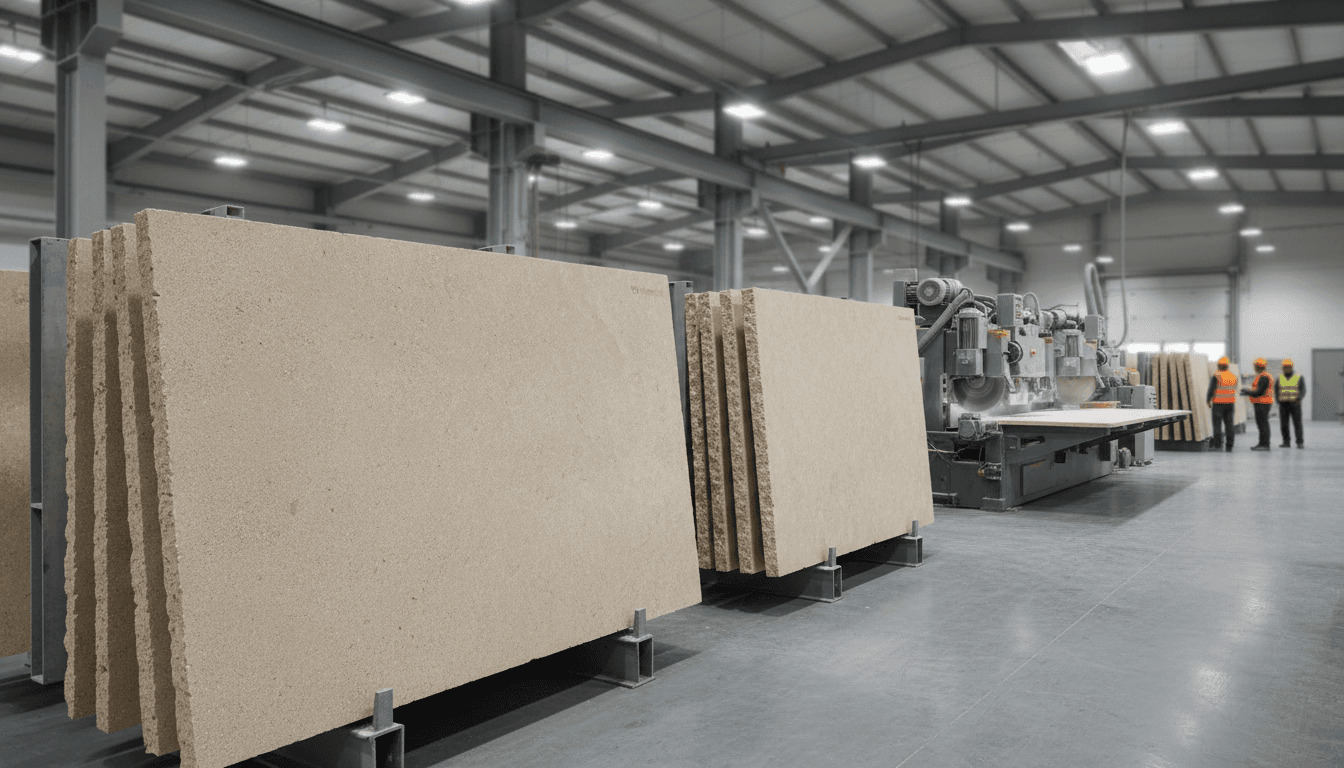
What every architect needs to know about natural stone testing standards — ASTM C97 (absorption/density), C170 (compressive strength), C880 (flexural strength), and how Moroccan limestone performs against these benchmarks.
When specifying natural stone, understanding the ASTM testing framework is as important as choosing the right color. ASTM International publishes the test standards that US architects, engineers, and building codes reference when evaluating dimensional stone. Without these numbers, a specification is incomplete — and a contractor substituting an untested product is a liability risk you don't want on your project.
ASTM C97 covers two properties simultaneously: water absorption and bulk density. Water absorption is expressed as a percentage of the stone's dry weight. For outdoor applications, pool surrounds, and freeze-thaw climates, absorption below 6% is the typical minimum — but the best natural limestones perform well below this threshold. Our Moroccan limestone (Atlas Beige and Atlas Grey) averages 2.99–3.89% absorption across 18 CTM lab tests (ASTM C97, May 2026). Bulk density measures mass per unit volume — a proxy for how tightly the stone is compacted. Atlas Beige averages ~2,450 kg/m³, consistent with the calcarenite limestone classification (denser than travertine at ~2,350, lighter than marble at ~2,700).
ASTM C170 measures uniaxial compressive strength — how much load a stone can withstand before crushing. The test is run on dry and saturated samples (the ratio indicates durability under moisture cycling). For limestone, ASTM recommends a minimum of 1,800 psi (~12.4 MPa) for interior use and 4,000 psi (~27.6 MPa) for exterior structural applications. Our Moroccan limestone tests between 40–90 MPa (5,800–13,000 psi) — well above both thresholds. The wide range reflects the natural variation between different quarry zones and test directions (parallel vs. perpendicular to bedding planes).

ASTM C880 tests flexural (bending) strength — the force required to snap a stone slab. This is critical for countertops, large-format pavers, and thin slab applications where point loads and cantilevers create bending forces. Atlas Beige and Atlas Grey test between 7–14 MPa (1,000–2,000 psi) — in the mid-range for limestone, significantly above the ASTM C880 minimum of 1.5 MPa for general-use limestone. For thin slabs or large overhangs, request our full C880 data sheet, which includes results by orientation and format.
When writing a stone specification, the most defensible approach is to specify by test performance, not by trade name. A well-structured stone spec section includes: minimum bulk density (e.g., ≥2,300 kg/m³), maximum water absorption (e.g., ≤5%), minimum compressive strength (e.g., ≥40 MPa per ASTM C170), minimum flexural strength (e.g., ≥7 MPa per ASTM C880), and for exterior/freeze-thaw applications: frost resistance certification (e.g., EN 12371, with ≤1% mass loss after 48 cycles). Our full CTM lab report package (18 PDF reports, ASTM C97/C170/C880/C99/C1353/EN 12371/12372/14066) is available on request — email contact@stonemade.ma with your project name.